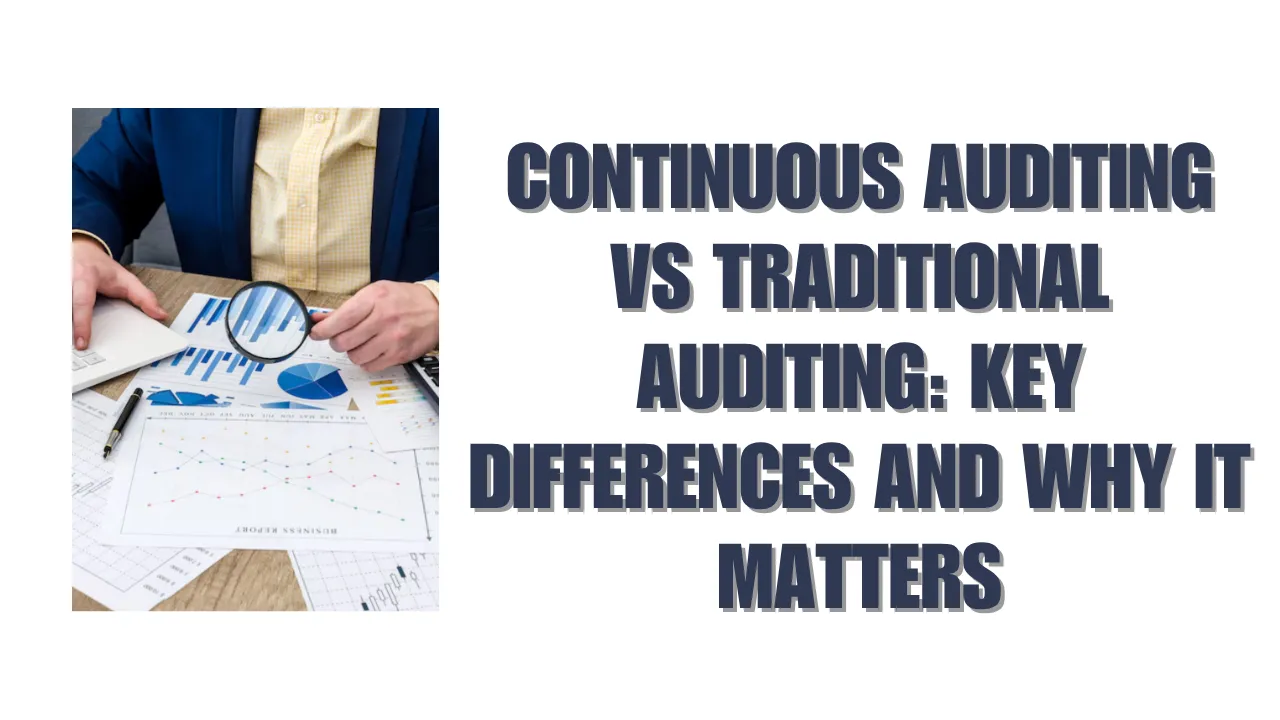
Key Takeaways
Understanding the differences between continuous and traditional auditing helps organizations choose the right approach for their risk management and compliance needs.
• Continuous auditing provides real-time oversight while traditional auditing offers periodic snapshots, enabling faster detection of financial discrepancies and fraud prevention.
• Technology transforms audit accuracy and efficiency by automating full population testing versus manual sample-based methods, reducing human error and sampling risks.
• Resource distribution improves significantly with continuous auditing spreading workload throughout the year instead of creating year-end crunches and bottlenecks.
• Implementation requires strategic planning including infrastructure assessment, phased rollouts, team training, and selecting tools that integrate with existing ERP systems.
• Cost benefits emerge over time through reduced manual labor, faster issue resolution, and improved regulatory compliance, with some organizations achieving 75% reduction in review hours.
The choice between approaches depends on your organization’s transaction volume, regulatory requirements, and risk tolerance. Organizations losing an estimated 5% of revenue to fraud annually can benefit significantly from continuous auditing’s early warning capabilities and real-time insights for strategic decision-making. Annual audits turn into a last-minute rush, potentially overlooking critical financial discrepancies or fraud. The continuous auditing vs traditional auditing debate has become significant as businesses seek more reliable financial oversight. Traditional audits are performed annually or biannually. Continuous auditing works in live or near live time and enables teams to detect issues and ensure compliance on an ongoing basis. This move from traditional audit vs modern audit approaches is transforming how organizations manage risk and maintain financial accuracy. In this piece, we’ll break down the differences between these auditing methods, explore continuous auditing vs continuous monitoring distinctions, and help you understand which approach fits your business needs.
Understanding Traditional Audit vs Modern Audit Approaches
How Traditional Auditing Works
Traditional auditing operates on a periodic basis and examines financial statements and internal controls at specific intervals throughout the year. Auditors visit organizations annually or quarterly. They review historical data samples, verify transactions, and assess control effectiveness. This approach relies heavily on manual work. It analyzes documents and conducts point-in-time assessments that look backward at what has occurred. Sample testing is the foundation. Auditors examine a subset of transactions rather than reviewing complete populations. The process follows a phased model: walkthroughs and design assessments early in the year, interim testing during the first nine to ten months, and year-end testing in the fourth quarter before certifications are finalized. This structured framework has provided clarity for years, but it identifies control failures months after they occur. Limited time remains for remediation before reporting deadlines.
The Rise of Continuous Auditing in Modern Business
Periodic audits struggle to keep pace with modern transaction volumes, regulatory expectations, and immediate decision-making needs. Organizations face accelerating reporting cycles and data environments that grow more complex. These require more dynamic oversight models. Continuous auditing emerged as a response to these pressures. It enables ongoing review of controls, transactions, and financial activity using automated tools and advanced analytics. Rather than relying on point-in-time testing alone, this approach allows organizations to assess risks and exceptions as activity occurs. It supports near immediate assurance and faster issue escalation.
Continuous Auditing vs Continuous Monitoring: What’s the Difference
Continuous auditing and continuous monitoring serve distinct purposes, though people discuss them together. Continuous auditing provides automated, independent testing of transactions and controls. Internal audit teams own this process and design rules and thresholds to review control performance throughout the year. Continuous monitoring focuses on immediate operational oversight by management. It detects issues early and prevents small problems from escalating into larger risks. Auditing delivers independent assurance and audit findings. Monitoring produces alerts and dashboards that process owners can act upon right away.
Key Differences Between Continuous and Traditional Auditing
The difference between continuous auditing vs traditional auditing goes beyond simple timing. Understanding these variations helps determine which model lines up with your organization’s risk tolerance and operational needs.
Audit Frequency: Periodic vs Ongoing Assessment
Traditional audits function according to preset schedules. They’re conducted annually or semi-annually to provide snapshots at specific moments. Continuous auditing monitors key business practices and security controls throughout the year. Issues get identified in real-time rather than months after they occur. A survey revealed mixed willingness among organizations. 32% prefer audits at specific times, while 31% support continuous auditing and see clear benefits.
Data Analysis: Sample Testing vs Full Population Review
Sample-based testing examines selected transactions to infer conclusions about entire populations. Continuous auditing makes use of analytics to test 100% or near-100% of data populations. This eliminates sampling risk entirely. The move enables auditors to detect anomalies that statistical samples might miss. Research shows 44% of respondents anticipate the biggest improvements to lie in analyzing full data populations. They see value in detecting anomalies in large datasets.
Technology Use: Manual Methods vs Automation and AI
Traditional approaches depend on manual analysis and physical document inspection. Time-consuming substantive procedures are common. Modern continuous auditing employs data infrastructure and system integration. Analytics capabilities automate evidence collection. Digital audits can process large volumes of data quickly. They provide immediate insights while cutting down preparation time.
Response Time: Delayed Findings vs Immediate Alerts
Periodic audits often reveal findings after periods have ended. This limits corrective opportunities. Continuous auditing serves as an early warning system and detects control failures on a more timely basis than traditional approaches. Real-time detection allows quick corrective action and greater effect prevention.
Resource Distribution: Year-End Crunch vs Spread Throughout the Year
Traditional audits concentrate effort during interim and year-end periods. This creates resource bottlenecks. Providing auditors with documentation has been identified as the most time-consuming element. 71% of respondents cited this. Continuous models distribute workload throughout the year and reduce these concentrated demands.
Accuracy Level: Human-Dependent vs Technology-Enhanced
Manual processes remain prone to human error and inconsistencies. Technology-driven continuous auditing reduces these risks through automated algorithms and predefined procedures. It ensures consistent application of audit methodologies.
Why Continuous Auditing Matters for Your Business
Organizations lose an estimated 5% of their revenue to fraud each year. Early detection mechanisms are vital for financial stability. The change from traditional audit vs modern audit methods addresses these losses through systematic, technology-enabled oversight.
Faster Detection of Financial Discrepancies
Continuous auditing flags exceptions, anomalies and control failures as they happen rather than finding issues weeks or months after occurrence. Unusual vendor payments or inappropriate user access privileges receive immediate attention and prevent escalation. Automated tools analyze large datasets continuously, which reduces human workload and increases fraud detection speed.
Lower Risk of Regulatory Non-Compliance
Up-to-the-minute oversight reduces the risk of penalties. It ensures adherence to industry standards on an ongoing basis. Regulators now expect organizations to demonstrate proactive compliance management rather than reactive audit responses. Continuous monitoring provides helpful documentation and an audit trail that regulators can follow.
Reduced Audit Costs Over Time
Automation minimizes intensive human labor needs. It increases efficiency and reduces costs. Organizations can achieve 75% reduction in manual review hours. Audit cycles are shortened and internal audit coverage expands with minimal incremental cost.
Improved Decision-Making with Up-to-the-Minute Analytical Insights
Continuous data analysis provides a strong foundation that supports strategic decisions. Up-to-date information enables quick responses to market changes, regulatory requirements or emerging opportunities.
How to Transition from Traditional to Continuous Auditing
Moving from traditional audit to modern audit methods requires planning you think through rather than rushed implementation. Success depends on methodical preparation across multiple organizational dimensions.
Assess Your Current Audit Process and Infrastructure
Start with a complete review of your audit framework against established standards. Review how current tools support decision-making procedures for strategy, operations and compliance activities. Data silos present the biggest problem. Companies that maintain scattered risk management data face security breaches more often. Assessment must reveal whether controls exist and whether they work.
Select the Right Continuous Auditing Tools and Technology
Technology selection should line up with your specific audit needs and business stakeholder requirements. Direct integration with ERP systems and accounting platforms creates a reliable source of truth through automated data extraction. Think over scalability, as IT systems will change over time and need adaptable solutions.
Develop a Phased Implementation Strategy
“Big bang” approaches risk overwhelming teams. You should break implementation into manageable phases that start with high-risk areas. Phase one involves visualizing successful outcomes and securing critical buy-in from stakeholders. Phase two adjusts plans according to budget constraints, deploys the program and monitors the rollout.
Train Your Team on New Systems and Processes
Audit teams require proficiency in data analytics tools, AI/ML models and automation solutions. Training should include hands-on workshops, resource centers with tutorials and technical skill development.
Monitor Results and Adjust Your Approach
Continuous auditing itself demands constant improvement. Review program effectiveness on a regular basis and incorporate feedback. Adapt to changes in business environment, risk landscape and technological capabilities.
Comparison Table: Continuous Auditing vs Traditional Auditing
| Attribute | Traditional Auditing | Continuous Auditing |
|---|---|---|
| Audit Frequency | Periodic basis – annually or semi-annually/quarterly | Ongoing assessment – immediate or near-immediate throughout the year |
| Data Analysis Approach | Sample-based testing – gets into selected transactions to infer conclusions about entire populations | Full population review – tests 100% or near-100% of data populations |
| Technology Use | Manual methods – relies on manual analysis, physical document inspection, and time-consuming substantive procedures | Automation and AI – employs data infrastructure, system integration, analytics capabilities, and automated algorithms |
| Response Time | Delayed findings – reveals findings after periods have ended, often months after occurrence | Immediate alerts – spots control failures and issues in real time and enables quick corrective action |
| Resource Distribution | Year-end crunch – concentrates effort during interim and year-end periods and creates resource bottlenecks | Spread throughout the year – distributes workload evenly and reduces concentrated demands |
| Accuracy Level | Human-dependent – prone to human error and inconsistencies | Technology-improved – reduces risks through automated algorithms and predefined procedures |
| Issue Detection Timing | Identifies control failures months after they occur | Flags exceptions, anomalies, and control failures as they happen |
| Testing Model | Phased model: walkthroughs early in year, interim testing (first 9-10 months), year-end testing in Q4 | Ongoing evaluation of controls, transactions, and financial activity |
| Primary Focus | Getting into historical data samples and point-in-time assessments that look backward | Near-immediate assurance and faster issue escalation |
| Sampling Risk | Present – statistical samples might miss anomalies | Eliminated – full data population analysis detects anomalies that samples might miss |
Additional Comparison: Continuous Auditing vs Continuous Monitoring
| Attribute | Continuous Auditing | Continuous Monitoring |
|---|---|---|
| Primary Purpose | Provides automated, independent testing of transactions and controls | Focuses on immediate operational oversight by management |
| Ownership | Owned by internal audit teams | Owned by management and process owners |
| Output | Delivers independent assurance and audit findings | Produces alerts and dashboards for immediate action |
| Function | Reviews control performance throughout the year using rules and thresholds | Spots issues early and prevents small problems from escalating |
Conclusion
The continuous auditing vs traditional auditing question doesn’t have a universal answer. Traditional audits still serve specific compliance needs well. Continuous auditing offers clear advantages for organizations that deal with high transaction volumes, complex data environments, or strict regulatory requirements.
Your choice ends up depending on your risk tolerance, resource availability, and business complexity. Assess your current audit gaps first and then determine whether real-time oversight justifies the technology investment for your specific situation.
FAQs
Q1. What distinguishes continuous auditing from traditional auditing methods?
Traditional auditing operates on a periodic schedule, typically conducted annually or quarterly, examining historical data samples at specific points in time. Continuous auditing, however, monitors business processes and controls in real-time or near real-time throughout the year, analyzing complete data populations rather than samples and providing immediate alerts when issues arise.
Q2. Why is continuous auditing important for modern businesses?
Continuous auditing provides ongoing examination of accounting practices, risk controls, compliance measures, and business procedures throughout the financial year. This approach enables faster detection of financial discrepancies, reduces regulatory non-compliance risks, lowers audit costs over time through automation, and supports better decision-making with real-time insights into organizational performance.
Q3. What are the main challenges of implementing continuous auditing?
Implementing continuous auditing requires significant investment in technology infrastructure and staff training. Organizations must overcome data silos, integrate systems with ERP platforms, and ensure audit teams develop proficiency in data analytics tools and automation solutions. The transition demands careful planning, phased implementation, and ongoing monitoring to achieve successful adoption.
Q4. How does continuous auditing improve fraud detection compared to traditional methods?
Continuous auditing flags exceptions, anomalies, and control failures as they occur rather than discovering issues weeks or months later. Automated tools analyze large datasets in real-time, identifying unusual vendor payments or inappropriate access privileges immediately, which prevents small problems from escalating into major financial losses.
Q5. What’s the difference between continuous auditing and continuous monitoring?
Continuous auditing provides automated, independent testing of transactions and controls, typically owned by internal audit teams, delivering formal audit findings and assurance. Continuous monitoring focuses on real-time operational oversight by management, producing alerts and dashboards that enable process owners to detect and address issues immediately before they become larger risks.
Content Overview
About the Author: Jonathan Maharaj

Join The Financial Freedom Newsletter
Join Jonathan Maharaj’s Financial Freedom Newsletter and receive practical insights on wealth building, tax strategy, retirement planning, and long-term financial success. Designed for professionals, business owners, and investors who want to make smarter financial decisions.