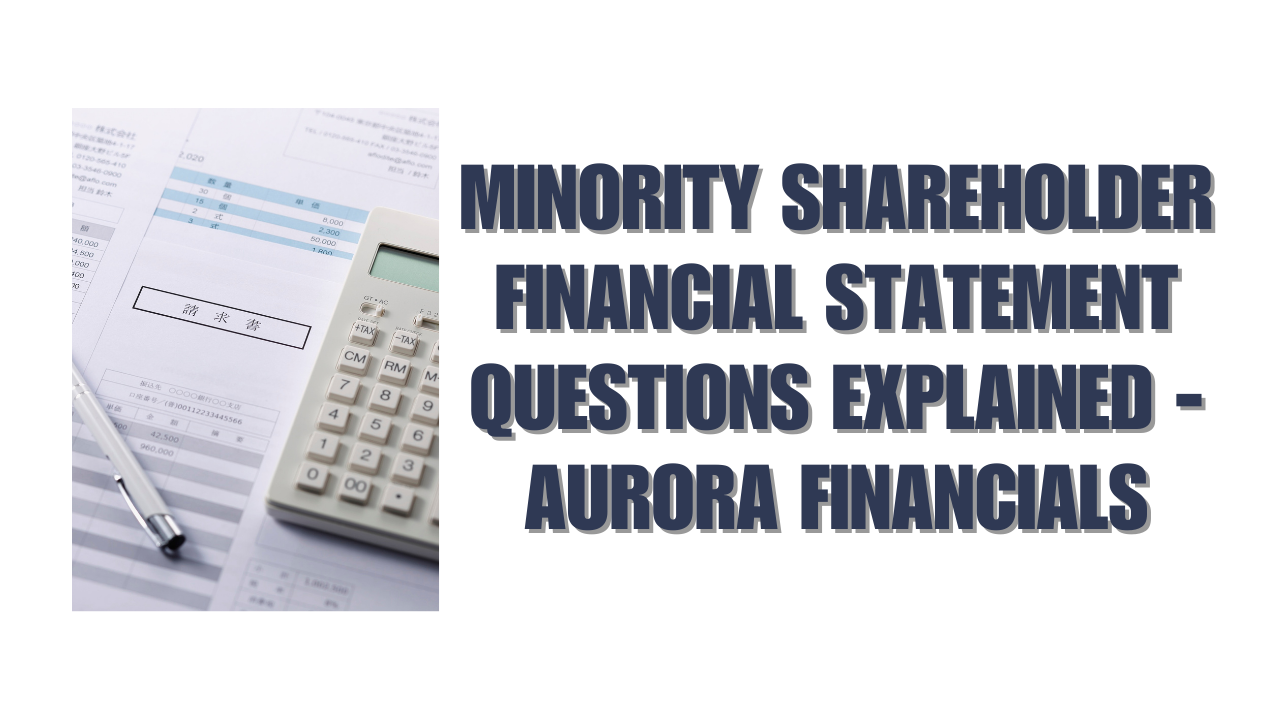
In many companies, approving financial statements is treated as a routine agenda item at the annual meeting. The documents are circulated, a few comments are made, and a vote is taken. Yet often, the most important issues can arise from minority shareholder financial statement questions.
For minority shareholders, especially in New Zealand, that approach can be risky.
Financial statements are not just compliance documents. They represent the company’s performance, financial health, governance quality, and future sustainability. Once approved, they become the official financial record of the company. As minority shareholders, we may not control board decisions, but we absolutely have the right – and the responsibility – to ask informed questions before approving them.
In New Zealand, shareholder rights are supported by the Companies Act 1993. However, legal protection only works when shareholders actively engage. In our experience working with businesses across New Zealand, well-informed minority shareholders often play a powerful role in strengthening transparency and accountability.
Below are the key questions minority shareholders in New Zealand should ask before approving financial statements.
1. Are the Financial Statements Compliant With New Zealand Reporting Standards?
In New Zealand, financial statements must comply with standards issued by the External Reporting Board (XRB). These standards ensure consistency and transparency across entities.
Before approving, ask:
- Have the correct financial reporting standards been applied?
- Are all required disclosures included?
- Has management confirmed full compliance?
Non-compliance in New Zealand can expose the company to regulatory scrutiny and reputational risk. As minority shareholders, we should ensure the foundation of the financial statements is technically sound.
2. Has an Independent Audit Been Conducted?
Not all companies in New Zealand require a statutory audit. However, many do – and in certain situations, minority shareholders can request one.
If an audit has been conducted, review the audit report carefully.
Ask:
- Was the opinion unmodified?
- Were there any qualifications or emphasis-of-matter paragraphs?
- Did the auditor highlight control weaknesses?
In New Zealand, a clean audit opinion provides reasonable assurance. A modified opinion deserves serious attention. Minority shareholders should never treat the audit report as a formality.
3. Were There Material Audit Adjustments?
Audit adjustments can indicate weaknesses in financial processes.
Ask:
- Did auditors propose significant changes?
- Were all adjustments recorded?
- Why did errors occur in the first place?
Recurring adjustments in New Zealand companies may signal deeper control deficiencies. As minority shareholders, understanding the nature of these adjustments is essential before approving the financial statements.
4. Is Revenue Genuine and Sustainable?
Revenue is often the most closely watched number in any set of financial statements.
Ask:
- Has revenue increased significantly compared to prior years?
- Are there one-off transactions boosting performance?
- Does revenue growth align with operating cash flow?
In New Zealand, revenue recognition must follow strict accounting principles. Minority shareholders should confirm that reported performance reflects real economic activity, not accounting timing differences.
5. What Does the Cash Flow Statement Reveal?
Profit does not always mean strong cash flow.
Ask:
- Is the company generating positive operating cash flow?
- Are receivables increasing faster than revenue?
- Has debt increased significantly?
In New Zealand, many financially stressed companies report profits while facing liquidity pressure. Minority shareholders must examine cash flow carefully before approving financial statements.
6. Are Related Party Transactions Transparent?
Related party transactions can create conflicts of interest, particularly in closely held companies across New Zealand.
Ask:
- Have directors or major shareholders engaged in transactions with the company?
- Were these transactions conducted at arm’s length?
- Are they fully disclosed in the notes?
Transparency in New Zealand corporate governance is critical. Minority shareholders must ensure fairness and proper disclosure.
7. Are All Liabilities Properly Recognised?
Hidden liabilities can severely impact shareholder value.
Ask:
- Are there pending legal claims?
- Are tax obligations fully accounted for?
- Are contingent liabilities disclosed clearly?
In New Zealand, directors are responsible for ensuring liabilities are not understated. Minority shareholders should confirm that no material exposures are omitted.
8. Is the Company Solvent?
Under the Companies Act 1993 in New Zealand, directors must consider solvency before making certain decisions.
Ask:
- Can the company meet its obligations as they fall due?
- Does the balance sheet show sufficient equity?
- Are there indicators of financial distress?
Solvency is fundamental. Minority shareholders in New Zealand should ensure that financial statements reflect a stable and sustainable position.
9. Have Accounting Policies Changed?
Changes in accounting policies can significantly affect reported results.
Ask:
- What policies changed during the year?
- What impact did the change have on profit or equity?
- Was the change required or voluntary?
In New Zealand, such changes must be clearly explained. Minority shareholders should assess whether changes improve transparency or simply alter presentation.
10. What Judgments and Estimates Were Used?
Financial statements include estimates for:
- Impairment of assets
- Fair value measurements
- Provisions and accruals
Ask:
- Are the assumptions reasonable?
- Are valuations independently supported?
- Could small assumption changes materially affect results?
In sectors common across New Zealand – such as property, agriculture, and infrastructure – estimates can significantly influence reported numbers.
11. Does the Directors’ Report Align With the Numbers?
The narrative section should support and explain financial performance.
Ask:
- Does management clearly explain challenges faced during the year?
- Are risks openly disclosed?
- Is the tone consistent with the financial data?
In New Zealand, transparent board reporting reflects a strong governance culture. Minority shareholders should expect clarity and accountability.
The Role of Minority Shareholders in New Zealand Governance
Minority shareholders in New Zealand may not have majority control, but their influence should not be underestimated. In well-governed organisations, constructive questioning strengthens reporting quality.
When minority shareholders ask informed questions in New Zealand, boards respond with greater diligence. Internal controls improve. Transparency increases. The approval of financial statements becomes a meaningful governance step rather than a routine vote.
Why This Matters More Than Ever in New Zealand
The corporate environment in New Zealand continues to evolve, with increased regulatory expectations and stakeholder scrutiny. Directors are expected to uphold high governance standards, and shareholders are expected to engage responsibly.
Approving financial statements without asking questions limits accountability. In contrast, informed engagement protects value and supports long-term sustainability.
At Aurora Financials, we regularly see that companies in New Zealand benefit when minority shareholders actively participate in reviewing financial information. Constructive dialogue strengthens confidence among investors, lenders, and regulators alike.
Conclusion
Approving financial statements in New Zealand is not simply a procedural step. It is a governance decision with long-term consequences.
As a minority shareholder, your protection lies in informed participation. Review compliance with the Companies Act 1993, examine audit findings, assess revenue quality, cash flow strength, liabilities, and accounting estimates. Once approved, those statements become the company’s official financial record.
If transparency concerns arise, qualifying shareholders can formally request an audit to gain independent assurance.
At Aurora Financials, we support shareholders and boards in strengthening financial oversight and improving reporting transparency.
Ask the right questions. Protect your investment. Strengthen governance.
Frequently Asked Questions
1. Do minority shareholders in New Zealand have the right to request an audit?
Yes. Under the Companies Act 1993 in New Zealand, shareholders holding a prescribed percentage of shares can request an audit in certain circumstances. Even where an audit is not mandatory, minority shareholders may seek assurance if there are concerns about transparency or financial accuracy. Exercising this right strengthens governance and ensures financial statements are independently reviewed before approval.
2. What should minority shareholders do if they disagree with the financial statements?
If minority shareholders in New Zealand believe the financial statements contain errors or lack transparency, they should formally raise their concerns before the approval vote. This may involve requesting clarification from directors, seeking independent advice, or asking for additional disclosures. If serious issues exist, legal remedies may be available under New Zealand company law to protect shareholder interests.
3. Why is cash flow analysis important for minority shareholders?
Cash flow analysis is critical because profit alone does not guarantee financial stability. In New Zealand, companies can report accounting profits while struggling to generate cash. Minority shareholders should review operating cash flow, debt levels, and liquidity indicators to ensure the company can meet its obligations and sustain operations before approving financial statements.
Content Overview
About the Author: Jonathan Maharaj

Join The Financial Freedom Newsletter
Join Jonathan Maharaj’s Financial Freedom Newsletter and receive practical insights on wealth building, tax strategy, retirement planning, and long-term financial success. Designed for professionals, business owners, and investors who want to make smarter financial decisions.