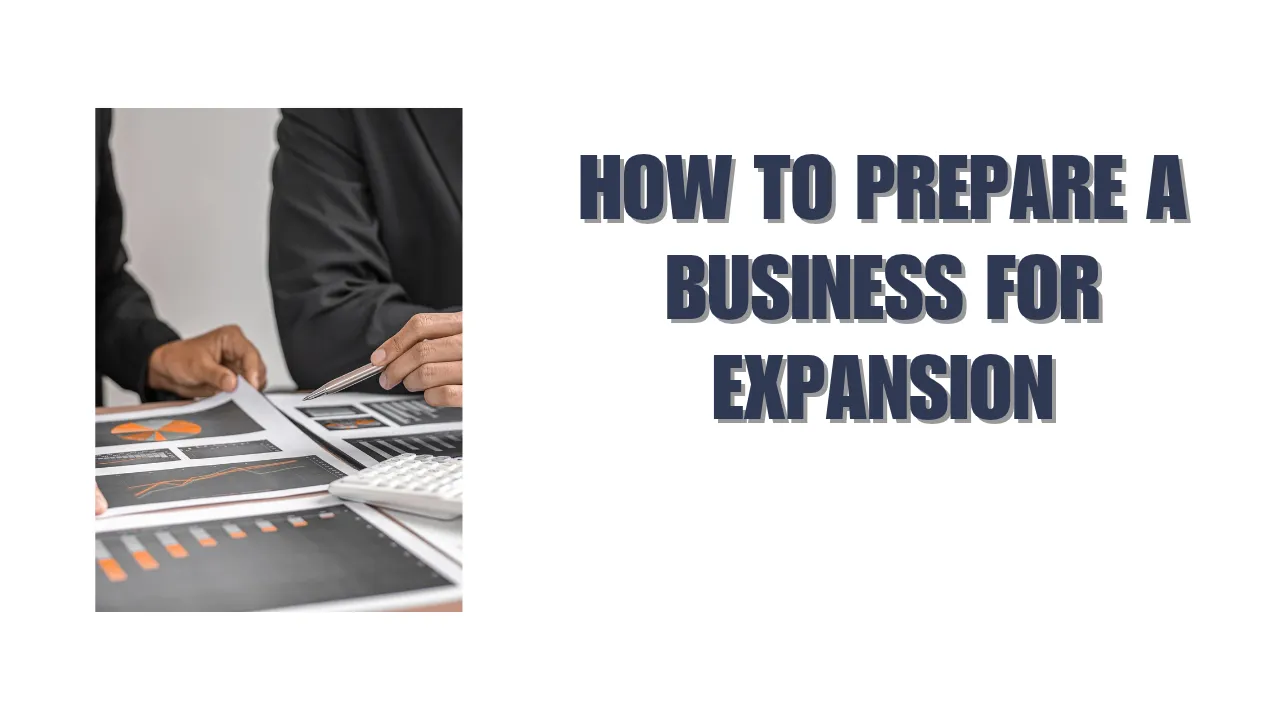
Business expansion can create new opportunities for revenue, market share and long-term growth. However, expanding too quickly or without adequate financial preparation can place pressure on cash flow, staff, systems and profitability.
For New Zealand businesses, preparing for expansion means understanding whether the existing business is financially and operationally ready to support the next stage. This involves reviewing current performance, forecasting the cost of growth, assessing funding requirements and making sure the business has the systems and resources to scale.
A well-planned expansion does not simply ask, “How much more can we sell?” It asks whether the business can grow while remaining financially sustainable.
What does business expansion involve?
Expansion can take several forms. A business might open another location, enter a new market, introduce additional products or services, hire more employees, increase production capacity or acquire another business.
The financial implications can vary significantly depending on the type of expansion.
For example, opening a new premises may involve rent, fit-out costs, equipment, insurance and additional employees. Entering a new market could require marketing, distribution and product development costs before additional revenue is generated.
Business.govt.nz recommends using financial forecasting and modelling when considering decisions such as entering a new market, buying equipment or premises, launching products and seeking investment.
1. Assess whether your business is ready to expand
Before committing to expansion, review the current performance of the business.
Look at revenue trends, profitability, cash flow, outstanding debts, customer demand and operating costs. A business that is already struggling with inconsistent cash flow or weak margins may need to strengthen its existing operations before taking on additional commitments.
Consider whether current demand is strong enough to justify expansion. Growth based on temporary demand may not provide enough long-term revenue to cover the additional costs.
It is also important to consider whether existing processes can handle increased activity. If the business is already experiencing delays, errors or capacity problems, expansion could magnify these issues.
Business.govt.nz recommends keeping business plans current and using planning to identify opportunities, resource requirements and potential gaps before major milestones.
2. Review your financial position
A clear understanding of your current financial position is essential before making expansion decisions.
Review your profit and loss statement, balance sheet and cash flow statement. These reports provide different information about the business and can highlight areas that need attention before expansion.
A profit and loss statement shows revenue, expenses and net profit. A cash flow statement shows the movement of cash through operating, investing and financing activities. The latter is particularly important during expansion because a business may need to spend cash well before it receives additional revenue.
Pay particular attention to:
- current cash reserves
- operating cash flow
- outstanding customer invoices
- existing borrowing
- gross and net profit margins
- fixed and variable costs
- working capital requirements.
The objective is to determine whether the current business can support the additional financial demands of expansion.
3. Calculate the full cost of expansion
One of the most common mistakes businesses can make is focusing on the obvious costs while overlooking secondary expenses.
For example, expanding into a new premises may involve much more than rent. There could be fit-out costs, equipment, utilities, insurance, technology, additional staffing, professional fees, marketing and higher inventory requirements.
Separate the costs into one-off and ongoing expenses.
One-off costs might include equipment purchases, renovations, professional services or initial marketing. Ongoing costs could include wages, rent, utilities, subscriptions, insurance, inventory and additional administration.
Business.govt.nz recommends considering both fixed and variable costs when estimating business costs and using financial forecasts to understand future cash requirements.
4. Prepare a detailed cash flow forecast
Expansion often creates a timing gap between spending money and receiving additional revenue.
For this reason, a cash flow forecast should be central to your expansion planning.
A cash flow forecast estimates future money coming into and going out of the business. It can show the opening balance, expected income, estimated expenses and projected closing balance.
Prepare forecasts based on realistic assumptions rather than assuming that every expansion target will be achieved immediately.
It can also be useful to prepare different scenarios. A realistic forecast can represent the expected outcome, while more conservative and optimistic forecasts can show what might happen if sales are lower or higher than anticipated.
Business.govt.nz specifically recommends using different income scenarios when forecasting and notes that cash flow forecasts can help businesses plan for growth, future cash shortages, asset purchases and borrowing decisions.
5. Determine how much funding you need
Once the expected costs and cash flow requirements are understood, determine how the expansion will be funded.
Possible sources may include retained business profits, additional owner capital, bank lending, investors or other forms of business finance.
The right option depends on the business’s circumstances and the nature of the expansion.
Before taking on additional debt, consider whether projected cash flow will be sufficient to meet repayments and other operating commitments. Similarly, if external investment is being considered, understand what the funding means for ownership and decision-making.
Financial modelling can help businesses assess whether a proposed expansion is financially viable and whether additional funding may be required.
6. Test the expansion financially before committing
A financial model can help you examine the expected performance of the expansion before making a major commitment.
For example, you could model:
- expected additional revenue
- additional staff costs
- increased inventory requirements
- new premises or equipment costs
- marketing expenditure
- financing costs
- expected profit
- cash flow requirements.
This allows you to assess different assumptions and identify potential financial pressure points.
An expansion can appear profitable when looking only at expected revenue, but the numbers may look different once additional overheads, financing costs and working capital requirements are included.
Financial modelling is particularly useful for comparing different expansion options before deciding which approach makes the most commercial sense.
7. Protect your existing cash flow
Growth should not put the existing business at unnecessary risk.
A business may need to continue funding its current operations while simultaneously paying for expansion. If too much cash is committed to the new project, the existing operation could struggle to meet its normal obligations.
Maintaining an appropriate cash buffer can provide some protection against unexpected expenses or slower-than-expected revenue.
Business.govt.nz recommends building a cash buffer and using budgets and cash flow forecasts to understand how much money is available for growth without overstretching the business.
The appropriate cash reserve will vary between businesses. A company with high fixed costs and seasonal revenue may require a different level of liquidity from a business with relatively low overheads and consistent monthly income.
8. Check whether your pricing can support growth
Expansion can increase revenue without necessarily improving profitability.
Before scaling, review whether your current pricing adequately covers direct costs, overheads and the additional resources required to deliver your products or services.
If expansion involves entering a new market, consider whether customers in that market have different price expectations or whether distribution and service costs will be higher.
It may also be necessary to calculate the profitability of individual products, services or customer segments.
Understanding these margins can help determine where expansion is most likely to create sustainable returns rather than simply increasing sales volume.
9. Prepare your staffing and operational capacity
Financial preparation is only one part of expansion planning.
Consider whether the business has enough employees, management capacity, equipment, technology and operational systems to support increased activity.
Hiring too early can increase fixed costs before additional revenue arrives. Hiring too late can create service problems, employee burnout and missed opportunities.
Build expected staffing costs into your financial forecast, including wages, recruitment, training and other employment-related expenses.
You should also consider whether existing processes can be standardised before expansion. Strong systems can make it easier to maintain consistency as transaction volumes and employee numbers increase.
10. Strengthen financial systems and reporting
As a business grows, financial information becomes increasingly important.
Expansion can create more transactions, customers, suppliers, employees and financial commitments. Without reliable bookkeeping and reporting processes, it can become harder to understand what is actually happening.
Regular management reporting can help business owners monitor revenue, expenses, margins, cash flow and performance against forecasts.
Accurate records are also important for meeting New Zealand tax obligations. Inland Revenue requires businesses to keep records of cash and non-cash sales and expenses for at least seven tax years.
Before expanding, review whether your accounting and reporting systems can handle the additional complexity.
11. Consider the risks associated with expansion
Every expansion involves uncertainty.
Sales may be lower than expected. Costs may increase. A new location may take longer to become profitable. A new product may not perform as planned.
Consider the financial impact of these scenarios before committing to the expansion.
You should also consider operational risks, supplier dependencies, customer concentration, technology requirements and potential disruptions.
Business.govt.nz recommends identifying vulnerabilities, key suppliers and operational dependencies as part of building a resilient business.
The objective is not to avoid all risk. It is to understand which risks could materially affect the expansion and prepare appropriate responses.
12. Set clear expansion KPIs
Once expansion begins, financial performance should be monitored against the original plan.
The right KPIs will depend on the type of expansion, but could include revenue growth, gross margin, operating profit, cash flow, customer acquisition, average transaction value, utilisation or sales per employee.
Compare actual results with the forecast regularly.
If revenue is below expectations or costs are significantly higher than planned, investigate the reason rather than waiting until the end of the financial year.
A financial forecast is most useful when it becomes a management tool rather than a document prepared only for funding applications.
When should a business expand?
There is no single financial threshold that determines whether a business is ready for expansion.
Instead, look for a combination of indicators. These may include consistent demand, sustainable profitability, reliable cash flow, sufficient management capacity and a clear understanding of the costs involved.
The business should also be able to explain why expansion makes commercial sense and how it will be funded.
If the numbers only work under highly optimistic assumptions, it may be worth reconsidering the timing or scale of the expansion.
How Aurora Financials can support business expansion
Expansion decisions often require more than historical financial statements. Business owners need forecasts, scenario analysis and a clear understanding of how a proposed investment could affect profitability and cash flow.
Aurora Financials can support businesses with financial reporting, forecasting, financial analysis and business advisory services. Working with an accountant or adviser before a major expansion can help identify funding requirements, test assumptions and assess whether the proposed strategy is financially sustainable.
Business.govt.nz also recommends seeking professional input when preparing business plans and making significant financial decisions.
With accurate financial information and forward-looking analysis, business owners can approach expansion with a clearer understanding of both the opportunity and the financial commitment involved.
Frequently Asked Questions
How do I know if my business is ready for expansion?
A business may be better positioned for expansion when it has consistent demand, sustainable profitability, reliable cash flow, adequate resources and a clear understanding of the costs and risks involved.
What should I consider financially before expanding a business?
Review current profitability, cash flow, existing debt, cash reserves, additional operating costs, working capital requirements, expected revenue and potential funding needs.
How can cash flow forecasting help with business expansion?
Cash flow forecasting helps estimate how expansion will affect money coming into and leaving the business. It can highlight potential cash shortages and help determine when additional funding may be required.
Should I borrow money to expand my business?
Borrowing can be appropriate when the expected benefits of expansion justify the additional financial commitments and projected cash flow can support repayments. The decision should be assessed using realistic financial forecasts rather than revenue projections alone.
What is financial modelling for business expansion?
Financial modelling uses financial assumptions to estimate how a proposed expansion could perform over time. It can help assess expected profitability, cash flow requirements, funding needs and potential risks.
How much cash should a business have before expanding?
There is no universal cash reserve requirement because the appropriate amount depends on factors such as fixed costs, seasonality, debt obligations and the nature of the expansion. The business should have enough liquidity to support its existing operations while managing the additional costs of growth.
Should I speak to an accountant before expanding my business?
It can be useful to involve an accountant or business adviser before making a significant expansion decision. They can help review financial performance, prepare forecasts, assess funding requirements and model different expansion scenarios.
Prepare for Growth Before You Commit
Successful expansion is not simply about finding more customers or increasing sales. It requires a business to understand whether its finances, people, systems and operations can support the additional activity.
Start by reviewing your current financial position, calculate the full cost of expansion and prepare realistic cash flow forecasts. Test different scenarios, assess funding options and establish KPIs that will allow you to monitor performance once the expansion begins.
For New Zealand businesses, taking the time to prepare financially can help reduce unnecessary pressure on the existing operation while giving owners a clearer view of the potential rewards and risks of growth.
Content Overview
About the Author: Jonathan Maharaj

Join The Financial Freedom Newsletter
Join Jonathan Maharaj’s Financial Freedom Newsletter and receive practical insights on wealth building, tax strategy, retirement planning, and long-term financial success. Designed for professionals, business owners, and investors who want to make smarter financial decisions.