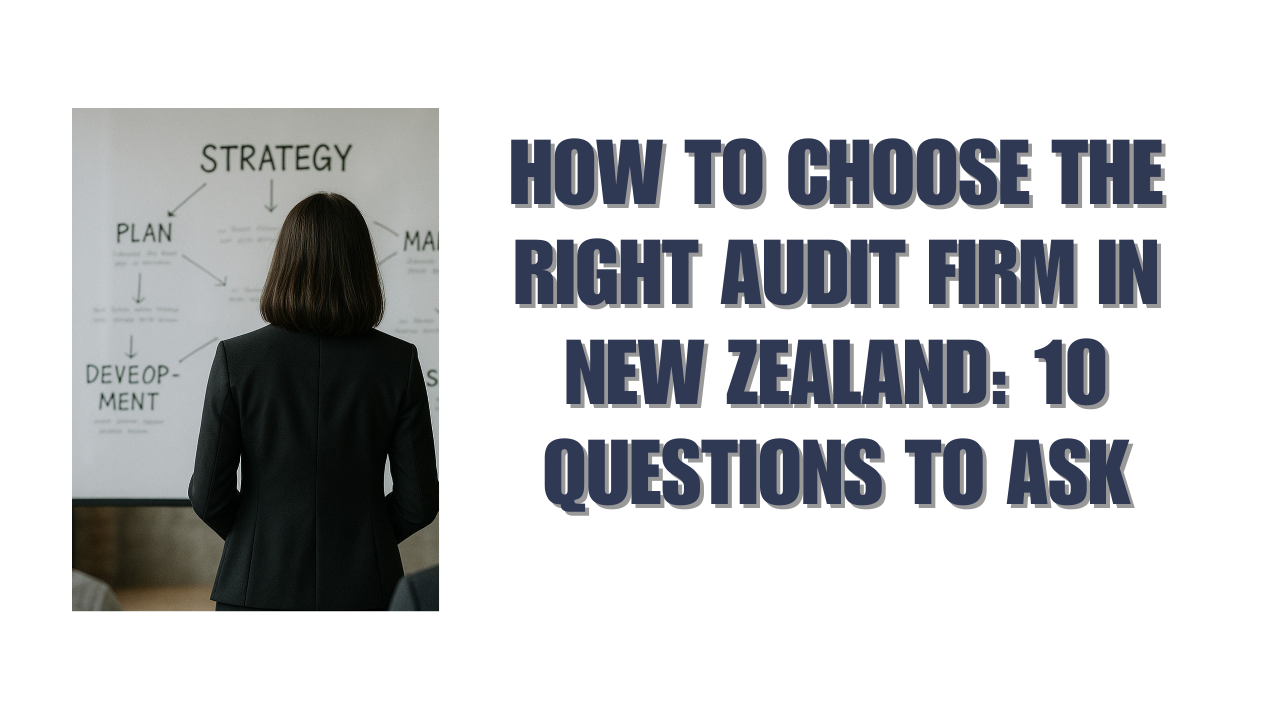
Picking the right audit firm for your New Zealand business can make or break your financial reporting, compliance, and business efficiency. Careful audit firm selection is essential to ensure your company’s needs are met.
Many organizations see external audits as just another box to tick for regulations. But finding the right match between auditor and client means much more than meeting compliance requirements. The Financial Markets Conduct Act, Tax Administration Act, and Companies Act keep changing New Zealand’s regulatory landscape. This means businesses need audit firms that really get these complex regulations. Your audit firm selection needs careful thought since auditors for most non-school public organizations must be replaced after six years to maintain independence.
Quality auditing services offer deep financial oversight and boost operational performance. These benefits easily outweigh the costs. Each industry – from agriculture and technology to manufacturing and financial services – needs auditors who understand specific regulatory and operational requirements. We’ve put together 10 key questions to help you choose the right audit firm with confidence.
What are your specific auditing needs?
You need a clear picture of your auditing requirements before you start looking for an audit firm. The perfect audit partner should line up with what you need and help you meet compliance while improving your business.
Understanding your auditing needs
The purpose of your audit sets the foundation for determining your needs. New Zealand organizations use audits for more than just regulatory compliance. An audit gives stakeholders reliable financial statements and service performance information through independent assessment.
Most organizations need one of these audit types:
- Statutory audits – Required by law for certain entities (like FMC reporting entities and larger charities)
- Financial statement audits – Verify financial reporting accuracy
- Internal audits – Identify inefficiencies and risks within your organization
- Compliance audits – Ensure adherence to regulatory requirements
Registered charities in New Zealand must follow specific reporting rules based on their operating expenditure. Charities with total operating expenditure over NZD 1.1 million for each of the previous two financial years are required to have their financial statements audited by a qualified auditor. Organizations with operating expenditure between NZD 550,000 and NZD 1.1 million for each of the previous two financial years may choose either an audit or a review, both of which must be conducted by a qualified auditor.
Why your audit scope matters
The audit scope sets clear boundaries for the engagement. It has sections about financial statements under review, time periods, and specific procedures. A well-laid-out scope will give a focused audit that targets your organization’s crucial areas.
The success of an audit depends largely on its scope. Research shows that most business leaders gain greater confidence in their financial statements after an audit. However, a common misconception is that audits are designed to detect all instances of fraud, when in reality their primary purpose is to provide reasonable assurance that the financial statements are free from material misstatement.
Three key factors drive scope:
- Risk assessment – Higher risk areas receive more audit attention
- Materiality – Determines which errors could reasonably influence users’ decisions
- Regulatory requirements – Dictates certain mandatory examination areas
Talk about scope limitations during your audit firm selection. A clear understanding of these boundaries prevents confusion and sets the right expectations.
How to assess your audit requirements
Your organization’s unique traits should guide your audit requirements. Industry type, size, and regulations all play important roles.
Here’s what you need to do:
- Review your governance documents – Your trust deed, constitution, or rules might specify audit requirements
- Identify stakeholder expectations – Know what funders, banks, or regulators want
- Evaluate risk areas – Find your highest-risk business functions
- Think about industry-specific challenges – Each sector faces unique auditing complexities
Set your audit goals early. Do you just need compliance, or do you want more value? It’s worth noting that 95% of organizations want their audit to deliver value beyond standard reporting.
Be upfront with potential audit firms about what you expect. This clarity helps them understand your needs and create the right approach. These discussions during selection help set clear expectations and prevent future scope-related issues.
Does the audit firm have experience in your industry?
Expert knowledge of specific industries serves as the foundation for effective auditing. Your audit’s quality and value will improve when you choose a firm that knows your sector well.
Industry-specific audit challenges
Every industry comes with its own complex auditing challenges that need specialized expertise. Audits in financial services need strict attention to regulatory compliance and risk management, while healthcare audits focus on patient privacy and billing accuracy. Manufacturing audits get into quality control measures and supply chain risks. Technology sector audits deal with intellectual property protection and cybersecurity threats.
A general understanding isn’t enough to handle these unique challenges. Business operations have become more complex, and external auditors need both technical accounting skills and a deep grasp of specific business models and operations. The compliance landscape keeps changing as standards and regulations evolve within each sector. This needs specialized attention.
Why industry expertise matters
Research shows that clients prefer auditors who specialize in their industry. This expertise becomes the deciding factor in about 4% of cases at the firm level and 6% at the office level. Clients have good reasons for this preference. Auditors with industry expertise are better at:
- Spotting and assessing industry-specific risks that affect financial reporting
- Finding financial misstatements and potential fraud
- Making audits more efficient by focusing on problem areas
- Speaking the industry language effectively
This specialization brings real value. Studies show that industry expertise creates value of about 5.2 million USD (0.36 percent of audit fees) when combined across clients. Larger and more complex clients show a stronger need for industry specialists, particularly at the audit office level.
How to verify industry experience
You should check potential auditors using these methods during the selection process:
Start by looking at their experience level. Ask about the number of peers they’ve worked with and their years of experience in your industry. Next, check their depth of specialization by testing their knowledge of industry-specific risks, fraud patterns, and unique transactions.
Their understanding of relevant accounting standards and their impact on your industry needs assessment. Look at their commitment to your sector through their involvement in trade associations and industry events.
The final step involves checking their industry reputation through conversations with peers or trade associations. Ask for references from similar-sized companies in your industry to learn about their actual performance.
A full assessment of an audit firm’s industry credentials helps your organization get more than just a standard audit. You’ll receive a service that’s tailored to your sector’s specific needs.
What is the firm’s reputation and credibility?
A firm’s reputation plays a crucial role in the audit firm selection process. You need to scrutinize an audit firm’s credibility to ensure you team up with professionals who uphold high standards and deliver quality results.
Audit firm reputation indicators
Several key metrics help assess reputation quality:
- Professional accreditations – Legitimate audit firms in New Zealand hold memberships with recognized accounting bodies such as Chartered Accountants Australia and New Zealand (CA ANZ) or CPA Australia
- Regulatory standing – Look for any disciplinary actions or sanctions from regulatory bodies
- Client retention rate – Organizations that keep their clients for years usually provide satisfactory services
- Transparency in reporting – Firms showcase accountability by openly sharing their audit methods
- Professional conduct – Auditor credibility relies on ethical behavior and independence
These indicators together show an audit firm’s professional standing and reliability in the marketplace.
Why credibility builds trust
Your external audit’s value depends heavily on credibility. Trust and technical competence are the foundations of effective auditor-client compatibility.
Reputable audit firms give stakeholders confidence in your financial reporting. Investors, regulators, and lenders trust information more when they see a respected firm’s name on your audit statements.
A credible audit firm shares its reputation with your financial statements. This borrowed credibility proves valuable for:
- Growing businesses seeking investment
- Organizations undergoing significant transitions
- Companies recovering from previous financial issues
- Entities operating in highly regulated environments
Credible auditors stay independent because they must remain objective. Their reputation depends on standing firm against pressure to lower standards or ignore problems.
How to research firm reputation
Start by looking into the audit firm’s history in the New Zealand market. A long-standing presence usually means stability and market acceptance.
Reach out to client references in your sector. Other organizations like yours can tell you exactly how the firm performs and manages relationships.
You should also check independent resources such as:
- Industry publications and rankings
- Financial Reporting Council reports
- Professional body membership directories
- Business media coverage
Digital presence matters too. Check the firm’s website, social media, and published authority content. These channels reveal their positioning and industry involvement.
Meeting potential audit firms face-to-face can tell you a lot. You’ll learn about their communication style, professionalism, and client approach – all vital factors in choosing your audit partner.
What technological tools does the firm use?
Technology adoption sets apart progressive audit firms from those stuck with old methods. The audit world changes faster than ever, and a firm’s tech capabilities should be central to your choice.
Audit firm technology capabilities
Modern audit firms use advanced technologies to deliver better audits:
- Data analytics tools help auditors analyze complete data sets instead of samples. They spot patterns and oddities that basic methods often miss
- Artificial intelligence (AI) cuts down human error and makes better decisions by handling massive data loads. It also takes care of routine tasks
- Cloud-based platforms create central data storage that makes shared work and remote teams possible
- Automation tools speed up repetitive work like pulling data, matching records, and testing transactions
- Blockchain technology produces clear, secure transaction records. This proves especially valuable for ESG reporting
Why tech matters in modern audits
Technology reshapes the audit process and brings many advantages. Advanced tools boost efficiency by automating routine tasks. This lets auditors spend more time on strategic work.
Tech solutions also cut down mistakes by reducing manual input. Studies show that audit teams using AI have seen up to 90% reduction in manual data-entry errors.
Full data analysis now replaces sample testing. Auditors use technology to look at every transaction instead of small samples, which leads to stronger findings.
Tech also uncovers deeper insights through predictive analytics and pattern spotting. These tools help find risks that might stay hidden otherwise.
How to evaluate audit tech stack
Your audit firm selection should answer these questions about tech capabilities:
- Does their tech create smooth workflows throughout the audit without manual data moves?
- Can their system handle complete data sets rather than samples?
- What safeguards protect your financial data?
- Does their tech make client collaboration and file sharing easy?
- How well does their audit software work with your current systems?
Ask for demos of their tech platforms to see the features yourself. Since 82% of auditors now use data analytics or emerging technologies in their work, tech skills have become crucial for picking an audit firm.
How transparent and communicative is the
Communication is the life-blood of successful audit relationships. Transparent firms openly share information about their methodologies, findings, and potential concerns throughout the audit process. This promotes trust and credibility needed for productive collaboration.
Good communication in auditing does more than deliver results. It creates an environment where both parties can openly discuss challenges and expectations. The best audit firms acknowledge their limitations, share findings promptly, and maintain honest dialog about potential issues during engagements.
Here’s what to think about when evaluating communication capabilities during your audit firm selection experience:
- Ask about their standard communication protocols—frequency of updates and preferred channels
- Ask how they handle difficult conversations about discrepancies or concerns
- Request examples of how they’ve communicated complex findings to non-technical audiences
- Watch their responsiveness throughout the original engagement process
Studies show that transparent audits build stakeholder trust by independently verifying business performance. Audit firms that prioritize openness show their steadfast dedication to accountability. This reassures stakeholders about the security of their investments.
You should request sample communications from prospective firms to assess clarity and accessibility. The right audit partner will communicate in plain language and avoid excessive jargon that hides important information.
Note that communication works both ways. The best firms actively listen to your concerns, respond quickly to questions, and are willing to adapt their approach based on your organization’s unique needs.
Comparison Table
| Question | Main Considerations | Key Benefits | Evaluation Criteria |
| What are your specific auditing needs? | – Statutory audits
– Financial statement audits – Internal audits – Compliance audits |
– More reliable financial statements
– Regulatory compliance – Business growth |
– Look through governance documents
– Know stakeholder expectations – Find risk areas – Address industry challenges |
| Does the audit firm know your industry well? | – Industry-specific challenges
– Regulatory requirements – Sector expertise |
– Better risk assessment
– Spotting fraud quickly – Faster audits – Clear communication |
– Time spent in industry
– Similar client portfolio – Deep industry knowledge – Peer feedback |
| How credible and respected is the firm? | – Professional certifications
– Standing with regulators – Client loyalty – Professional behavior |
– Stakeholders trust you more
– More trusted financial reports – Unbiased auditing |
– Where they rank in industry
– What clients say – Professional memberships – News coverage |
| What tech tools do they use? | – Data analytics tools
– AI capabilities – Cloud platforms – Automation tools |
– Faster work
– Better accuracy – Full data analysis – Deeper understanding |
– How it fits your workflow
– Data safety measures – Works with your systems – Tech demos |
| How well do they communicate? | – Ways they keep in touch
– How often they update – Information sharing |
– Builds trust
– Works together better – Everyone understands clearly |
– How fast they respond
– Clear messages – Handling tough issues – Listening to you |
FAQs
Q1. What factors should I consider when choosing an audit firm in New Zealand?
When selecting an audit firm, consider their industry experience, reputation, technological capabilities, communication style, and ability to meet your specific auditing needs. Also, ensure they are accredited by recognized bodies like Chartered Accountants Australia and New Zealand (CA ANZ) or CPA Australia.
Q2. How important is industry-specific experience for an audit firm?
Industry-specific experience is crucial as it enables auditors to better understand sector-specific risks, regulations, and challenges. Firms with relevant experience can conduct more efficient and effective audits, providing deeper insights and value beyond basic compliance.
Q3. What role does technology play in modern auditing?
Technology plays a significant role in modern auditing by enhancing efficiency, accuracy, and depth of analysis. Advanced tools like data analytics, AI, and automation enable auditors to examine entire datasets, identify anomalies, and provide more comprehensive insights than traditional methods.
Q4. How can I verify an audit firm’s reputation and credibility?
You can verify an audit firm’s reputation by checking their professional accreditations, regulatory standing, client retention rates, and industry rankings. Additionally, seek references from peers in your industry and review the firm’s thought leadership and media presence.
Content Overview
About the Author: Jonathan Maharaj

Join The Financial Freedom Newsletter
Join Jonathan Maharaj’s Financial Freedom Newsletter and receive practical insights on wealth building, tax strategy, retirement planning, and long-term financial success. Designed for professionals, business owners, and investors who want to make smarter financial decisions.