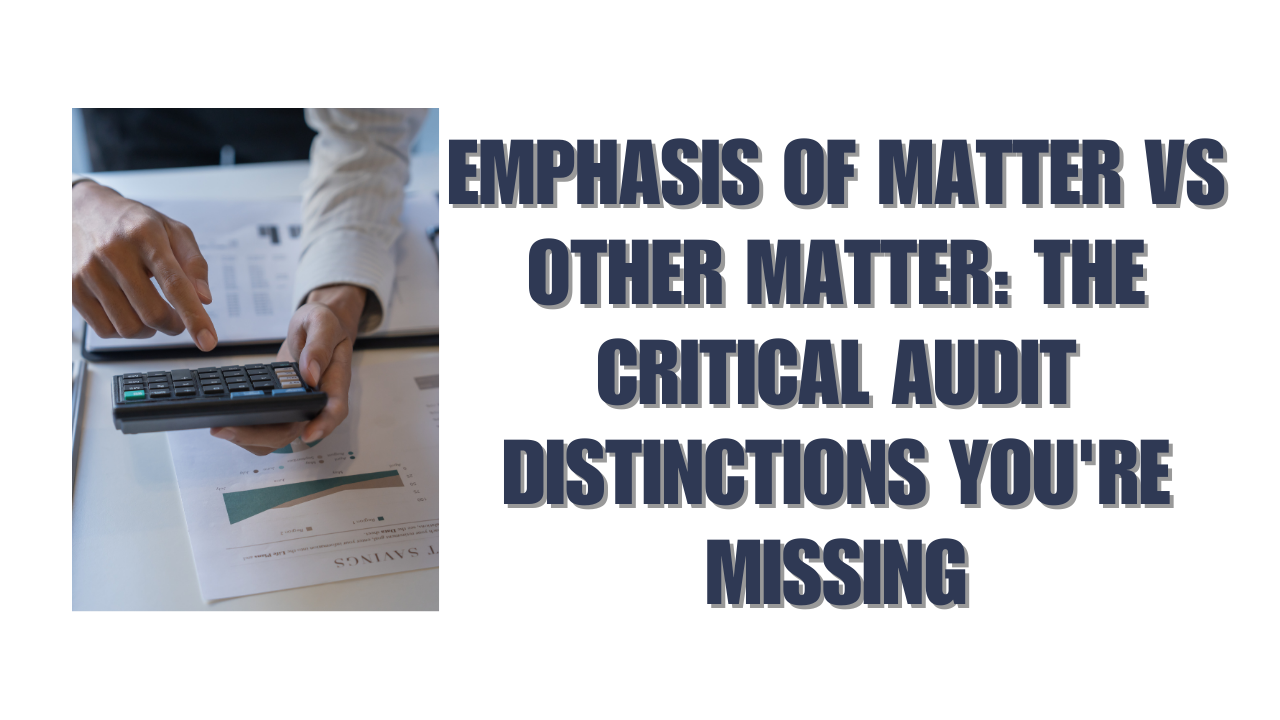
Ever wonder why certain audit reports have special paragraphs that catch your eye? An emphasis of the matter audit paragraph works as a powerful communication tool that guides readers toward key issues without changing the audit opinion. Knowing the differences between audit opinion types plays a vital role in interpreting financial statements correctly.
Financial statement reviews typically reveal several audit opinions. These range from unmodified “clean” opinions to modified ones. A qualified audit opinion points to material misstatements, while an emphasis of matter paragraph in the audit report expresses important information already shown in the financial statements. An adverse opinion sounds the alarm. It tells readers not to trust the financial content as a true picture of an organization’s financial position. A disclaimer of opinion signals problems that are both material and widespread. These problems affect much of the financial information.
This piece dives into key differences between emphasis of matter audit reports and other matter paragraphs. You’ll learn about the right time to use each type and how they affect financial statement users. Making informed business decisions requires a clear grasp of these differences. Misinterpreting audit findings could get pricey, so understanding these details matters.
Defining Emphasis of Matter and Other Matter in Audit Reports
The audit report helps auditors communicate with stakeholders. Auditors use special paragraphs to highlight specific points without changing their opinion.
An Emphasis of Matter (EOM) paragraph points to key information that already exists in financial statements. Readers need this information to understand the complete picture. It’s like saying “pay attention to this part.” You’ll often see EOM paragraphs for issues like major concerns about business continuity, important events after reporting, or big changes in accounting methods.
The Other Matter (OM) paragraph talks about relevant information not found in financial statements. This information helps people understand the audit, what auditors do, and the final report better. The main difference is that OM deals with things outside the financial statements. Auditors use these paragraphs to explain restricted-use reports or why they didn’t reissue a previous auditor’s report.
The biggest difference lies in their focus. EOM talks about the financial statements while OM covers the audit process or report. On top of that, it’s worth noting that these paragraphs don’t change the auditor’s opinion – you can have a clean opinion and still point out key issues.
Both types of paragraphs work with non-standard audit reports and qualified or adverse opinions. They help readers spot information they shouldn’t miss.
How and When to Use Emphasis of Matter Paragraphs
The decision to add an emphasis of matter paragraph needs careful judgment. Auditors need to confirm that the information is fundamental to users’ understanding of financial statements. Two essential criteria must be met: the opinion about the matter should not need modification, and when ISA 701 applies, the issue should not qualify as a key audit matter.
A well-formatted EOM needs specific elements. The section must have “Emphasis of Matter” as its heading. It should clearly reference the emphasized issue and point to relevant disclosures in financial statements. The section must also state that the auditor’s opinion remains unmodified.
These specific situations need emphasis of matter paragraphs:
- Exceptional litigation or regulatory action with uncertain outcomes
- Most important events that occur between the financial statement date and auditor’s report
- Material effects from early adoption of new accounting standards
- Financial position changes due to major catastrophes
- Going concern uncertainties where the entity needs continuing support
The placement of emphasis of matter paragraphs follows specific rules. They appear right after the Opinion section in unmodified opinions. Modified opinions place them after the Basis for Modification section. When Key Audit Matters are present, EOMs may appear before or after that section based on how vital the matter is.
EOMs serve a specific purpose and cannot replace required financial statement disclosures or opinion modifications.
Understanding Other Matter Paragraphs in Context
Other Matter (OM) paragraphs serve a different purpose than their counterparts in audit reports. These paragraphs cover important issues that financial statements don’t show but users need to understand the audit, auditor’s responsibilities, and the audit report itself.
Other Matter paragraphs mainly serve several important functions. They point out material differences between audited financial statements and unaudited information in annual reports under ISA 720. The paragraphs also explain situations where entities prepare financial statements using multiple frameworks. Users can find clarification in these paragraphs when reports should reach only specific audiences rather than spread widely.
The location of these paragraphs matters significantly. They appear right after the Opinion section in unmodified opinions and follow the Basis for Modification section in modified opinions. Public sector auditors often place them at the start of reports because readers find them particularly important.
When Key Audit Matters and Other Matter paragraphs appear in the same document, auditors might add context to separate them. They use headings like “Other Matter – Scope of the Audit”. Auditors must discuss with governance teams about planning and scoping that might need inclusion in these paragraphs.
These Other Matter paragraphs serve as valuable tools to communicate audit information that goes way beyond the reach and influence of financial statements.
Conclusion
This piece explores the vital differences between Emphasis of Matter and Other Matter paragraphs in audit reports. Both tools communicate important information without changing the audit opinion.
A clear difference exists between them. Emphasis of Matter paragraphs highlight key information already shown in financial statements. These paragraphs flag content that readers must not miss. Other Matter paragraphs focus on relevant audit details not found in financial statements.
Financial statement users can avoid getting things wrong by knowing these differences. To name just one example, see how an EOM paragraph about going concern uncertainties points to real business continuity questions. This doesn’t suggest audit failures. An OM paragraph that explains audit scope limits adds context without making the whole audit invalid.
These paragraphs’ placement in the report matters substantially. They usually appear after the Opinion section in unmodified reports. In modified opinions, you’ll find them after the Basis for Modification section. Their position might change based on importance and Key Audit Matters.
An auditor’s judgment becomes vital to decide if these specialized paragraphs belong in a report. The information must be fundamental to a user’s understanding before it gets highlighted in an EOM paragraph.
Next time you look at financial statements, watch for these different paragraph types. They don’t alter the audit opinion but boost your ability to make smart financial choices. This knowledge helps you grasp what auditors say about an organization’s financial health and reporting quality.
FAQs
Q1. What is the main difference between Emphasis of Matter and Other Matter paragraphs in audit reports?
Emphasis of Matter paragraphs highlight critical information already disclosed in financial statements, while Other Matter paragraphs address relevant audit-related information not presented in the financial statements themselves.
Q2. When should an auditor include an Emphasis of Matter paragraph?
An auditor should include an Emphasis of Matter paragraph when they determine that certain information is fundamental to users’ understanding of the financial statements, such as significant uncertainties, subsequent events, or going concern issues.
Q3. Where are Emphasis of Matter and Other Matter paragraphs typically placed in an audit report?
Both types of paragraphs are usually placed after the Opinion section in unmodified reports or after the Basis for Modification section in modified opinions. However, their positioning may vary based on relative importance and the presence of Key Audit Matters.
Content Overview
About the Author: Jonathan Maharaj

Join The Financial Freedom Newsletter
Join Jonathan Maharaj’s Financial Freedom Newsletter and receive practical insights on wealth building, tax strategy, retirement planning, and long-term financial success. Designed for professionals, business owners, and investors who want to make smarter financial decisions.