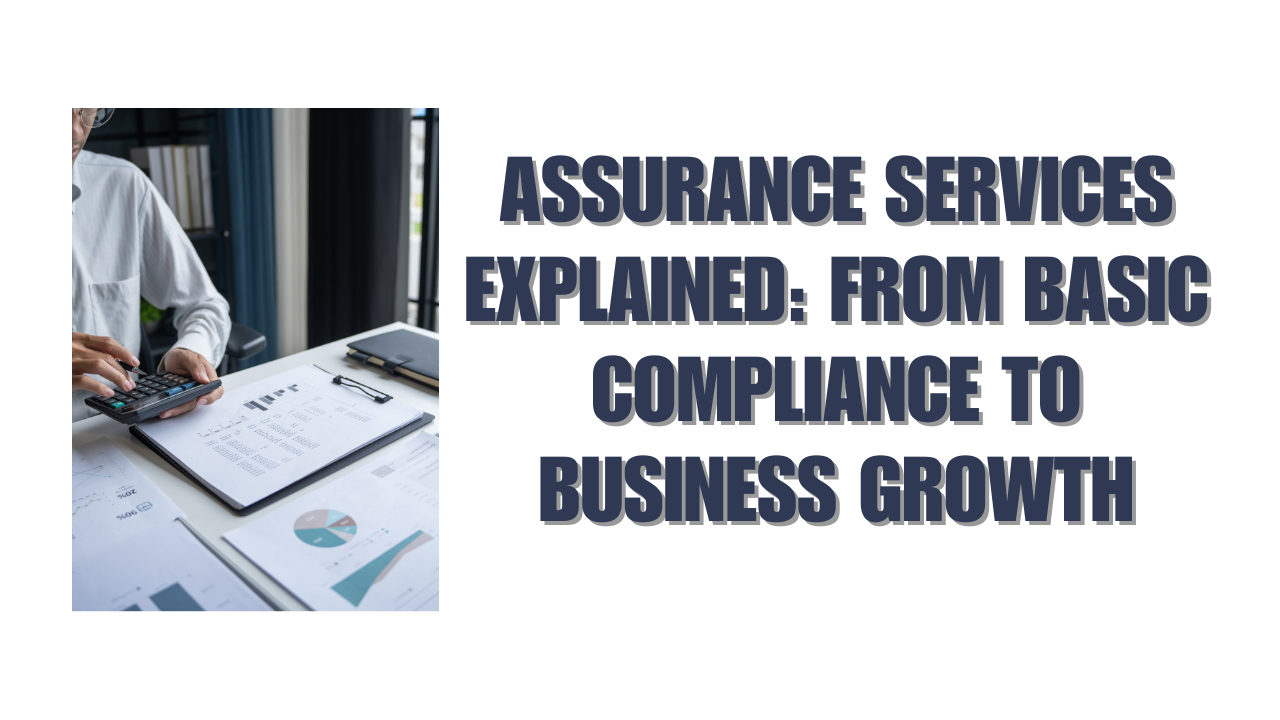
Assurance services play a crucial role in today’s digital world, especially since the Sarbanes-Oxley Act of 2002 came into effect to shield investors from misleading financial information. Most people think these services just mean financial statement audits. The reality is they include many professional activities that boost information quality and lower risk for decision-makers.
These services come from certified professionals like CPAs who review financial documents, transactions, loans, contracts, and financial websites. Their independent professional work helps companies make informed business decisions. Quality assurance services do more than just check compliance boxes. They improve information quality, especially when you have sectors that need resilient and fair procurement processes. On top of that, they help the public sector stay transparent.
This piece will get into what assurance services really mean. You’ll learn the difference between assurance and non-assurance services, and explore various types of assurance work in auditing. We’ll see how these services stimulate business growth through better transparency and decision-making. To cite an instance, well-run organizations often rely on quality assurance services to manage their performance effectively.
What is Assurance Services and Why It Matters
The technical definition of assurance services comes from the International Standard on Assurance Engagements (ISAE) 3000 framework. This framework is the life-blood for assurance engagements that don’t include audits or reviews of historical financial information.
Definition based on ISAE 3000 Framework
Assurance services are independent professional evaluations that improve the confidence level of intended users about specific information. The ISAE 3000 framework requires five main components: a three-party relationship, agreed subject matter, suitable criteria, sufficient appropriate evidence, and a written report with conclusions. This well-laid-out approach will give users more confidence in their decisions because the data has independent verification.
Assurance vs Non-Assurance Services Explained
Non-assurance services differ from assurance services because they don’t provide conclusions about information reliability. The main difference shows in the practitioner’s output. Assurance engagements give conclusions about confidence levels, while non-assurance services provide advice without such statements.
Examples of assurance services include:
- Financial statement audits that provide opinions on fair presentation
- Review engagements offering moderate assurance on financial statements
- Risk assessments and internal control evaluations
Non-assurance services typically involve consulting activities like tax preparation, strategic planning, and management advice. Agreed-upon procedures don’t count as assurance engagements because they only show factual findings without conclusions.
The Role of Accountants in Assurance Engagements
Accountants work as independent practitioners within the three-party relationship that forms assurance engagements. They act as skeptics and gather evidence to check if information has any material misstatement. Their independence is vital -they need both independence of mind and appearance to make objective judgments and use appropriate professional skepticism.
Accountants must follow ethical standards, including the Code of Ethics for Professional Accountants. They just need to evaluate sustainability reports, information systems, and regulatory compliance beyond financial audits. Their technical expertise and professional judgment are great ways to get stakeholders to trust the information they use for important decisions.
Core Components of an Assurance Engagement
Quality assurance work depends on several interconnected components. These elements help distinguish assurance from other professional services and ensure good outcomes.
Three-Party Relationship: Practitioner, Responsible Party, Users
Assurance engagement brings together three key parties. The assurance practitioner leads the engagement and uses professional expertise to gather evidence before reaching a conclusion. The responsible party creates subject matter information based on set criteria. This party may or may not be the one hiring the practitioner. The intended users are the people or organizations who will use the assurance report. The responsible party can be one of the users but can’t be the only intended audience.
Agreed Subject Matter and Suitable Criteria
You need to identify the subject matter and measure it consistently against predetermined standards. Common subject matter categories include:
- Financial performance or conditions
- Physical characteristics of facilities
- Systems and processes (such as internal controls)
- Organizational behavior and compliance
Suitable criteria act as evaluation standards. These range from formal frameworks like International Financial Reporting Standards to internal codes of conduct. Without proper criteria, people might misinterpret any conclusion.
Sufficient Appropriate Evidence and Written Conclusion
Practitioners must collect enough relevant evidence through systematic procedures while staying professionally skeptical. Evidence quantity determines sufficiency, while quality shows its appropriateness – focusing on relevance and reliability. High-quality evidence might reduce the needed quantity, but conflicting evidence requires more investigation.
After collecting evidence, practitioners write a clear conclusion in a written report. This conclusion states whether the subject matter information contains any significant errors. The written report becomes the final product that boosts users’ trust in the information.
Types of Assurance Services in Auditing and Beyond
Assurance services now go way beyond traditional financial statement audits and include professional assessments that make information more reliable in a variety of fields.
Financial Statement Audits under ISA Standards
International Standards on Auditing (ISA) guide financial statement audits and provide a well-laid-out framework to form opinions on financial statements. The structure of each ISA has sections that cover introduction, objective, definitions, requirements, and application guidance. A specific example is ISA (NZ) 700 (Revised), which details how auditors should form their opinion on financial statements.
Review Engagements: ISRE 2400 Overview
Review engagements provide less assurance than full audits. The International Standard on Review Engagements (ISRE) 2400 explains what practitioners must do when they review historical financial statements and how to format the final report. IFAC points out that review engagements are a great way to get assurance that meets SME needs without straining their resources.
Risk Assessment and Internal Control Reviews
Internal control over financial reporting (ICFR) builds “the bedrock of public and investor confidence in the capital markets”. These reviews assess an organization’s risk management protocols through a systematic process. The process looks at compliance culture, analyzes risk exposure, checks controls, assesses communications, and examines monitoring systems.
IT and Information Systems Assurance
Information systems assurance tackles vulnerabilities to attacks or system failures that come from infrastructure flaws, weak configurations, or poor security management. The services typically cover system assurance, controls design, project assurance, and penetration testing to reduce risks.
Sustainability and ESG Reporting Assurance
ESG reporting assurance has grown with regulatory requirements to verify environmental, social, and governance (ESG) disclosures. These services check claims about carbon emissions, energy use, and social initiatives. They also ensure compliance with frameworks like GRI Standards, ISSB requirements, and the EU’s Corporate Sustainability Reporting Directive.
Healthcare and E-commerce Assurance Examples
Healthcare organizations use assurance services to take an integrated approach to risks while delivering high-quality, person-centered care. E-commerce quality control services make sure products meet platform requirements, country-specific regulations, and consumer expectations. This helps prevent account suspension or termination on major platforms.
How Assurance Services Drive Business Growth
Simple data checks are not enough. Assurance services create real business value that helps organizations grow.
Reducing Information Risk for Better Decisions
Quality information helps decision-makers reduce their risks. Companies that use external assurance can rely more on their data for planning and resource decisions. Unlike consulting services that look to the future, assurance services check past information for accuracy. A systematic review of processes, controls, and operations gives management a clear view of how the organization performs. This helps them avoid poor decisions based on bad data.
Enhancing Transparency for Investors and Stakeholders
External audits boost trust and credibility with stakeholders. Reports checked by external auditors come across as more credible, honest, and reliable than unchecked ones. This applies to non-financial reports too. More than two-thirds (67%) of the world’s 250 biggest companies now ask for independent checks of their non-financial information. New Zealand falls behind here – only six of its 100 largest companies seek this kind of assurance.
Assurance as a Competitive Differentiator
Smart businesses use assurance services to stand out in busy markets:
- Companies that go through strict third-party checks have more credibility
- Stakeholders now make decisions based on verified information, making assurance essential
- Organizations with strong ESG assurance attract more capital and better valuations
Case Example: Balanced Scorecard Assurance
The Balanced Scorecard (BSC) framework shows how assurance adds real value. BSC helps companies improve their financial performance, marketing, internal processes, and human resources to create wealth. The BSC becomes even more powerful when combined with Enterprise Risk Management (ERM). This combination lets ERM grow from a small practice into one that shapes the entire BSC system.
Conclusion
Assurance services go way beyond traditional financial audits and are a great way to get reliable information for decision-making. This piece shows how these services give independent verification that improves confidence in many types of information.
Assurance engagements follow a well-laid-out approach with five main parts: the three-party relationship, agreed subject matter, suitable criteria, sufficient evidence, and a written conclusion. This framework helps distinguish assurance from non-assurance services that don’t provide formal conclusions about information reliability.
Professional skepticism and independence are crucial for practitioners who gather appropriate evidence. Their work now covers more than financial audits. They evaluate sustainability reports, information systems, and check regulatory compliance.
Modern assurance services meet the needs of organizations of all types. Financial statement audits under ISA standards give high levels of assurance. Review engagements provide economical solutions for smaller companies. Risk assessments, IT systems assurance, and sustainability reporting verification are now the foundations of the assurance landscape.
These services stimulate business growth in several ways. They lower information risk and help make better strategic decisions based on verified data. Organizations that accept new ideas about robust assurance practices often get ahead of their competition.
The Balanced Scorecard example shows how assurance works with enterprise risk management to create wealth across multiple business areas. This integration proves assurance’s strategic value beyond just compliance.
Business environments keep getting more complex, and the need for quality assurance services will grow without doubt. Companies that see assurance as a strategic investment rather than just a requirement will build more trust, make better decisions, and achieve environmentally responsible growth in today’s tough business world.
FAQs
Q1. How do assurance services differ from non-assurance services?
The key difference lies in the outcome. Assurance services provide a conclusion expressing a level of confidence about the reliability of information, while non-assurance services offer advice without such expressions. For example, a financial audit is an assurance service, whereas tax preparation is a non-assurance service.
Q2. How can assurance services contribute to business growth?
Assurance services drive business growth by reducing information risk, enhancing transparency for stakeholders, and serving as a competitive differentiator. They improve the quality of decision-making, build credibility with investors, and can lead to better strategic planning and resource allocation.
Q3. What types of assurance services are available beyond financial audits?
Assurance services extend beyond financial audits to include review engagements, risk assessments, IT and information systems assurance, sustainability and ESG reporting assurance, and specialized services for sectors like healthcare and e-commerce. These diverse offerings help organizations address various information quality and compliance needs.
Content Overview
About the Author: Jonathan Maharaj

Join The Financial Freedom Newsletter
Join Jonathan Maharaj’s Financial Freedom Newsletter and receive practical insights on wealth building, tax strategy, retirement planning, and long-term financial success. Designed for professionals, business owners, and investors who want to make smarter financial decisions.